
Wilkins Named as May Employee of the Month
July 6, 2015Local Healthcare Services Now Approved for Area Veterans
July 8, 2015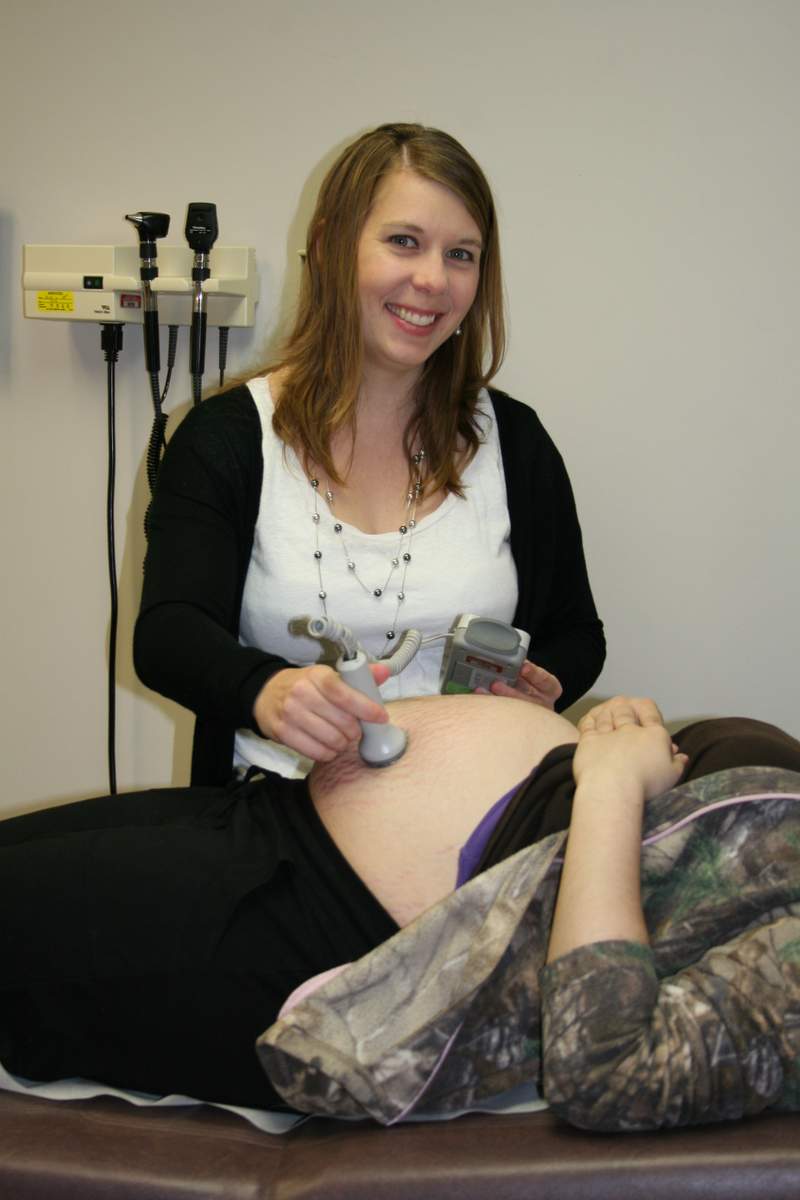
Tracey Arwood with a patient at the TCMH Medical Complex.
“When there are no medical or obstetric complications, pregnant women should exercise 30 minutes a day on most or all days of the week,” Arwood said, citing guidelines recommended by the American College of Obstetrics and Gynecology.
Arwood also recommends talking with your healthcare provider if you have medical conditions that might cause complications with exercise during pregnancy.
“Exercise during pregnancy has many benefits,” Arwood said. “You can maintain or even improve your fitness level, prevent excessive weight gain, prevent or reduce lower back pain, reduce the risk of developing gestational diabetes or preeclampsia and decrease the risk of delivery by cesarean.”
Most types of exercise and recreational activities are safe during pregnancy. Suggested activities include walking, aerobic dance, yoga, Pilates, swimming, cycling and light weight training. Aquatic exercise can improve swelling pressure on joints, balance and body temperature.
Arwood cautions that activities with an increased risk of falling such as gymnastics, horseback riding and skiing or activities with an increase risk of abdominal trauma such as hockey, soccer and basketball should be avoided. Straining while exercising which might be done during heavy weight lifting or decreasing oxygen intake while scuba diving or high altitude hiking or skiing should also be avoided.
“Exercise during pregnancy will not cause any adverse pregnancy outcome and does not lead to preterm labor for women with an already healthy pregnancy,” Arwood said, explaining that babies will tolerate exercise during any month of pregnancy.
Arwood noted that women exercising during pregnancy need to be aware of changes to joints and the body during pregnancy.
“Abdominal growth will change a woman’s balance which can increase the likelihood of a fall,” Arwood said. “It’s also important to stay hydrated and cool during prenatal exercise.”
Women that are beginning exercise during pregnancy should start with 15 minutes of low-intensity exercise, three times a week, and increase intensity, frequency and duration over time.
Women that exercise regularly prior to pregnancy should try to maintain physical fitness without strenuous training for competitions.
“Vigorous exercise during pregnancy is not generally recommended,” Arwood said. “You should be able to carry on a normal conversation while exercising.”
Proper hydration is “essential” during exercise. Arwood also recommends eating protein and healthy carbohydrates such as peanuts or yogurt if exercising for 45 minutes or more. Excessive heat, saunas and hot tubs should be avoided during pregnancy.
“Call your healthcare provider if you experience any bleeding or leaking of amniotic fluid while exercising,” Arwood said. Other possible conditions to watch for include lightheadedness, difficulty in breathing, calf pain or swelling, muscle weakness, uterine contractions or decreased fetal movement.
Exercise during pregnancy and continued after giving birth can help with weight loss and reduce future obesity-related risks such as diabetes and hypertension.
“Postpartum exercise can help relieve stress and may alleviate symptoms of postpartum depression,” Arwood said, adding, “Immediately after giving birth, women may need to rest, heal, and adjust to a new baby, returning to an exercise routine slowly, as your body allows.”
According to Arwood, most women return to their pre-pregnancy state around six weeks after having their baby as long as there were no complications during delivery or a delivery by cesarean-section.
Arwood also noted that exercise will not affect breast milk or infant acceptance of breast milk.
“Women that are exercising and breastfeeding should increase their fluid and nutritional intake so milk production does not decrease,” Arwood said.
Strenuous exercise while breastfeeding can increase lactic acid in breast milk which an infant might reject.
“I have found that pregnancy is an ideal time for positive lifestyle changes for many women,” Arwood said. “Increasing physical activity and eating a healthy diet are an excellent way to benefit your baby and yourself.”